 Santhu
You may have visited or heard which the best places to visit in Asia are, but visiting some of the most underrated travel destinations in Asia is also a crucial things to an backpacker, especially culturally rich places like Chiang Rai White Temple. Despite being some of the most visited places like Tokyo or Kyoto, taking things to Chiang Rai is a really different travel experience.

In the list of most visited places in Chiang Rai, exploring history, and appreciating the architecture of “White Temple” of Chiang Rai or Wat Rong Khun is a vital activity to an enthusiastic backpacker. We wish this article will going to help you that what makes visitors to add White temple in their travel bucket list and how to do successful trip with this architectural rich temple.
Related Search: Palawan, Philippines.
White Temple History

Before we dig more about this White Temple/Wat Rong Khun of Chiang Rai, it is important to know about its past. Construction began in the year of 1997 by the Thai artist Chalermchai Kositpipat, he is the leading person who initiated the project.
The primary purpose of construction is to symbolise the light and purity of Buddha/Buddhism. Unlike other traditional contemporary Buddhist temples in Thailand, White temple is totally a different one, its white color design, mirrored glass and Buddhist pop culture art are separating it from the rest of Thai temples.

When he decided to build this temple, he intended to add that it needed to inspire and welcome visitors through modern themes and artistic beauties along with rich century old Buddhist ideologies. Today the temple contains some of the special and controvesical paintings and images, while exploring you can see popular pop icon and modern culture images that grab the views of the attention of visitors.
Since its opening, temple complexes have been modified and added many buildings and parking lots including restaurants, coffee shops and commercial buildings. But during 2014, the temple was hit by the massive earthquakes and its effects heavily damaged the temple designs and architectures. After some years it was renovated again and opened to the public.

Despite its past, the temple is still unfinished, but it stands as a testament of journey towards enlightenment and visionary ideas of Kositpipat’s in the field of architecture and spirituality.
White Temple Architectures (Outside)

White temple of Chiang Rai was made brilliantly in northern Thailand. This temple is one of the perfect examples of a country’s monochrome white structure reflecting confectionary facade glitting and surrounding moat.
While you observe the outside architecture of the temple you’ll see the threshold of the moat (in the entrance), which is covered by the jagged thorns, gaping skulls and extended hands. Each design reflects Buddhist traditions and philosophy, especially the notions of nirvana. Each of these symbols of exterior designs represents the relinquish of individual desire, sin and greed before entering this holy temple.
Inside Architecture of White Temple

Once we enter inside of White temple we slowly realise that temple is heavily influenced by the traditional Thai Buddhist culture and religious influences. To make it more clear, the materials that they used, such as the three-tiered roof are great examples of Thai architecture.
Additionally statues of Kinnara, which will help to boost more temple architecture richness. Kinnara are a kind of half human and half bird architecture which usually we can see in Buddhist old textures. Likewise, Naga (snake) is another sculpture who gave shelter to Buddha from rain during his meditation. Naga is the most intrinsic architecture feature among most of the temple interior sculptures, built into the facade and we can see each of the temple’s exteriors. Mostly this design relies on the cycle of rebirth to enlightenment of Lord Buddha.
Who Built Wat Rong Khun?
The mastermind behind this magical architecture is Chalermchai Kositpipa, a person who designed and conceived according to native of Chiang Rai in 1997. Kositpipa was born in 1955 in a Thai Chinese family, and his background help to understand deep cultural knowledge and understanding about his traditions, especially Buddhist customs. And this helps provide good foundations to build this exceptionally unique temple besides other 45,000 Thai temples.
However, he did his BFA in Thai art from Solpakorn University, which gave him deeper knowledge about architecture ideas especially in the field of paintings, sculptures, prints, phantasmagoric depictions and lithographs. During this construction process, he used 120 artists and craftsmen as his team members and spent roughly 1.2$ (40 million baht). The interesting fact here is, the Temple constructions are still not finished yet, but open to the general public to enjoy the reflecting ongoing artistic endeavours.
Which Materials Chalermchai Kositpipa Used to This Temple?

Chalermchai Kositpipa used different materials to both external and internal temple architectures. He applied white plaster color to exterior designs, and it was adorned with pieces of mirrored silvery transparent glass which inserts to ease the sparkling and shimmering effect of Buddha. Besides, the temple includes some traditional elements in its exterior designs such as wood roof, built with three layer Lanna style of structures including Naga serpents.
When it comes to interior designs he added here more sculptural works. Inside murals depicted are more in numbers, covered with colorful and modern murals that depict incidents of good and evil deeds. Gold leaf and paint are heavily used to make decorations within the shrine and you can see a seated Buddha, wax statue of a monk too.
White Temple Hands

Hands in White Temple existed below the bridge of “The Cycle of Rebirth”. The hands in the temple’s design represents the suffering of humans and their grasp for enlightenments. It showcases how human desires, greed, suffering and unrestrained passion are trapped in the cycles of rebirths. Simply, we call it the “Pit of Hell”.
Located in the main path of the temple, where you’ll see before entering the temple. These hands explain the struggles and desires of humanity and seek salvation in very desperate ways. And the purpose of making struggling hands in the entry of the temple is, every visitor should realise how to relinquish desire, sin and greed before entering this holy temple and in his life too. Even today these hands serve as a pitiful remainder of the trials individuals face on their spiritual journey.
“The Cycle of Rebirth” Bridge
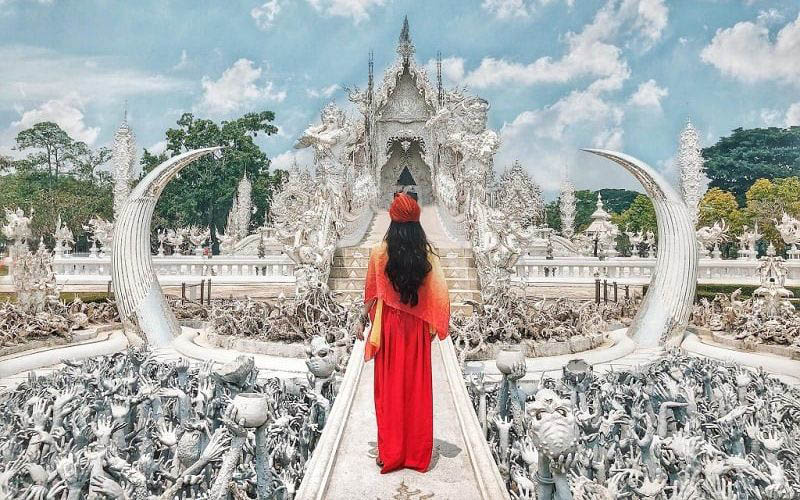
While walking around the White temple you’ll find a bridge called “The cycle of Rebirth”. Bridge is often called as the most captivating element in temple structure, and bridge stands as a symbol of SAMSARA. In order to cross this bridge people came across the idea of an endless cycle of birth, death and rebirth.
The bridge contains alcohol bottles, grotesque masks and decapitated demon heads hanging from the trees at the foot of the bridge. Hundreds of White Temple hands/ hundreds of stucco hands fall below this bridge, these skeletal forms twisted in agony.
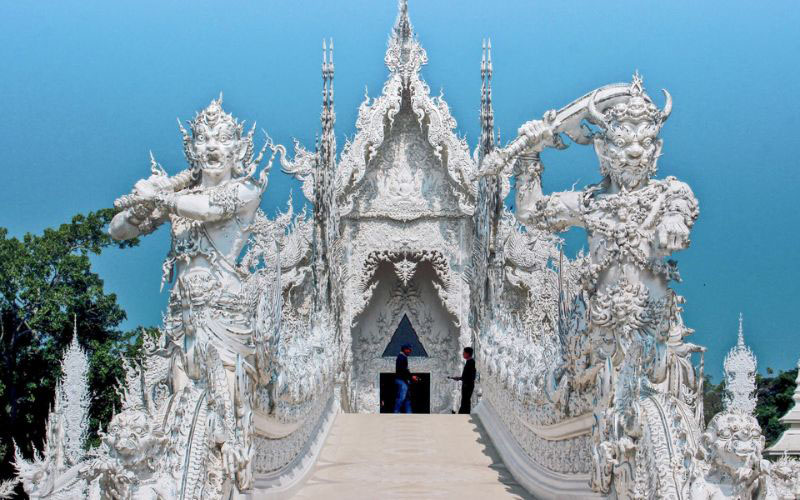
Some sort of clutch bowls, bones, skulls and frozen mid grasp are also ideal things to watch here. Today bridges stand as the path to enlightenment and purity, and one needs to pass through suffering and temptations before entering a temple or attain spiritual prayers.
The Ubosot
The Ubosot is the most prominent feature in the temple’s architecture. Ubosot is the main hall of the temple, where the main statue of the Buddha existed and was enshrined too. This structure contains the feature of white walls, silver roof and intricate details on its wall, representing more elaborate details of Nirvana Buddhism.
While you clearly observe this boost you’ll see it surrounded by low walls that include 12 zodiac signs on it, and this explains about the 12 months of the year. Additionally, its 6 windows and 6 doors clearly show 6 spiritual realms.
Interior design is all about murals, paintings and images of Buddha (in different forms). Internal designs of Ubisoft includes popular culture such as cartoons, movies, superheroes and brands. Mural images even clearly showcasing the negative impression about violence, war, environmental distractions, humans past and terrorisms.
While leisurely walking inside, these murals will make you stop and reflect artistic brilliance, including his own portrait and signature in murals. Murals in Ubosot are totally unique and controversial pieces of art collections, each one positively influences conventional and traditional notions of Buddhism traditions.
White Temple Entry Fee
Entry fee to the Wat Rong Khun in Chiang Rai, Thailand is “200 Thai Baht ($6.5)” for foreign visitors. But entry fee has some exceptions, you should be Thai national, aged above 70 years (both Thai citizen and Foreigner) and those who having a child less than 120 cm, then you can freely enter without paying a single penny.
Your entry fee would cover Cave of art gallery access, but with a strict dress code of full shoulders and knees, not sheeveleees tops and shorts. Make sure that ticket prices are subject to modification and change, so checking the current fee before visiting the destination is very important. Therefore visit its official website to get the current entry price.
Wat Rong Khun Opening Hours
Wat Rong Khun is open to the general public daily from 8:00 AM to 5:00 PM. Visiting early in the morning is a good idea since temples have less travel crowds, calm atmospheres and easy to explore inside and outside architectures.
How to Get to Wat Rong Khun
Getting to Wat Rong Khun is easy but if you’re an international visitor then choose Chiang Rai international airport. If you plan to visit Bangkok, then there are direct flights available every 1.5 hours to Chiang Rai International airport. Beside this, backpackers will get some occasional flights from Phuket. From airports plenty of rental cars are waiting to take you to your destination.
Planning to come through buses and trains, then don’t worry, good number of buses available for every three hours to Chiang Rai. Old Bus station (Terminal 1) and New Bus station (Terminal 2) are 2 major bus stops. From terminal 1 you’ll get buses to Chiang Khing and Mae Sai, from terminal 2 to Bangkok and Chiang Mai.
Recommended Reading: 10 Cheapest Places to See in the World.